

The business card with a QR code has transformed the way professionals network and market their businesses. By combining the familiarity of a traditional printed business card with the convenience of digital technology, they make it faster and easier to share contact information, showcase your work, and build real connections.
Instead of manually entering contact details, recipients can simply scan a QR code with their smartphone to instantly access your information. A single QR code can link to your website, portfolio, social media profiles, online booking system, location directions, digital business card, or even a promotional video, creating a more engaging and memorable networking experience.
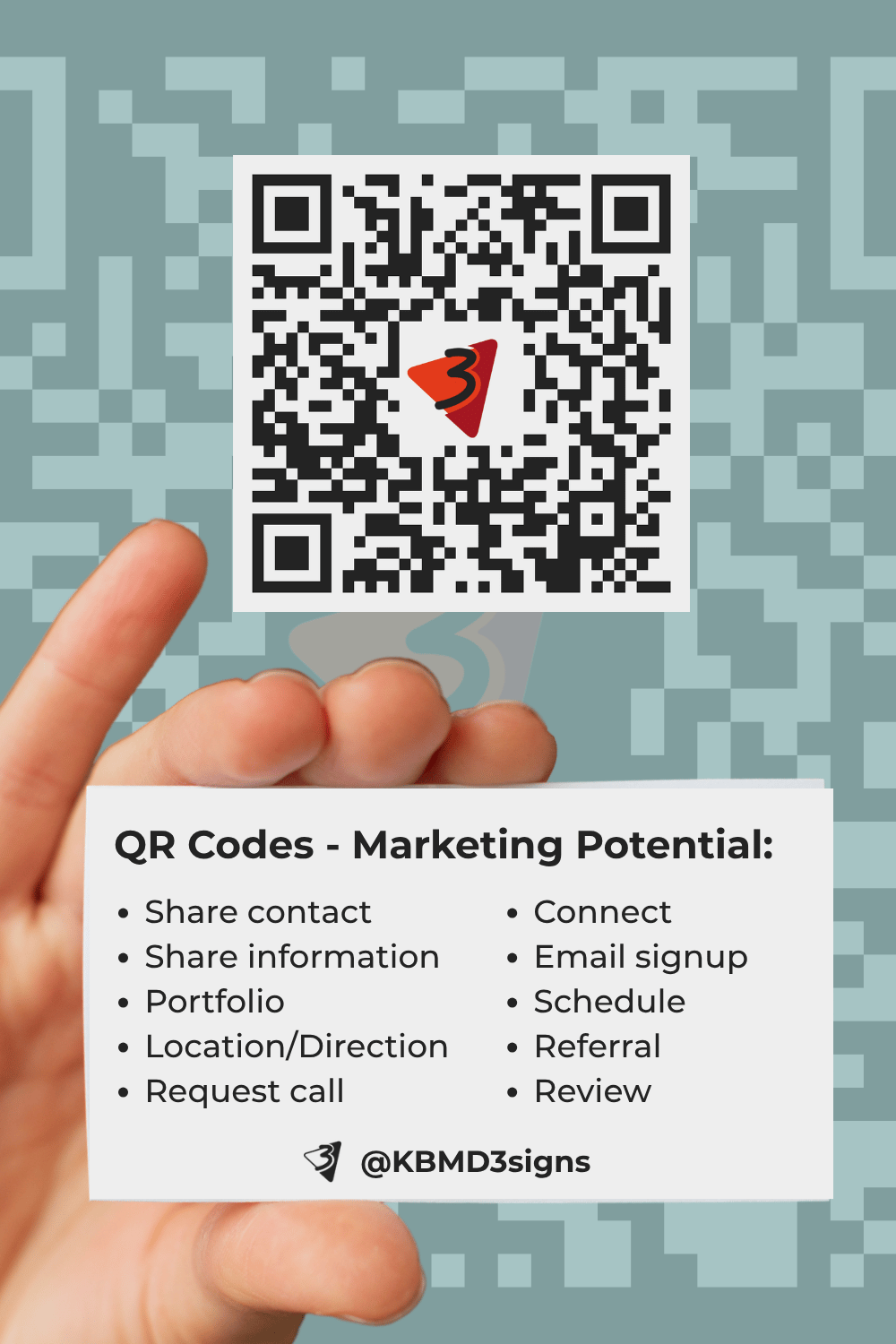
In this guide, you’ll discover the benefits of QR code business cards, learn how to design them effectively, explore creative ways to use them for marketing on a budget, and find practical tips to maximize their impact.
Article Content:
- What Is a Business Card with a QR Code?
- Benefits vs. Traditional Business Cards
- How QR Code Business Cards Work
- Creative Ways to Use QR Codes on Business Cards
- Marketing Ideas to Generate & Keep Customers
- Best Design Practices
- Common Mistakes to Avoid
- Explore KBM Designs’ QR Code Products
- Frequently Asked Questions (FAQ)
What Is a Business Card with a QR Code?
Whether you’re a small business owner, freelancer, consultant, or creative professional, a business card with a QR code helps bridge the gap between print and digital marketing. It makes networking more convenient, enhances your professional image, and creates new opportunities to engage with clients long after you’ve exchanged cards. Simply put, it takes the physical handshake and immediately turns it into a digital relationship.
Business cards have long been a staple in the professional world, serving as tangible reminders of networking encounters. However, as the digital age has progressed, the limitations of traditional business cards have become apparent. Handing out physical cards can be cumbersome, and relying on someone to manually enter your contact information often leads to lost connections. This is where QR codes come in.
Benefits of a Business Card with QR Code vs. a Traditional One
Efficiency and Accessibility:
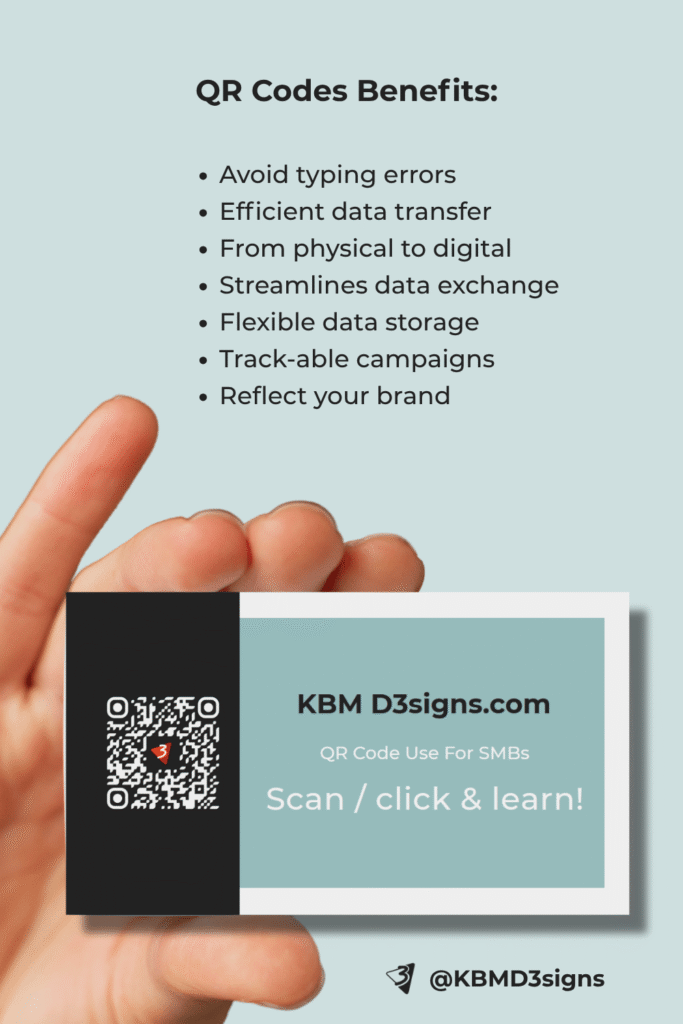
One of the key advantages of QR code business cards is their efficiency. Instead of manually inputting details from a physical card, individuals can simply scan the QR code using a smartphone camera. This process not only saves time but also eliminates typing errors.
Furthermore, QR codes can store more than just a phone number. They can link to websites, social media profiles, portfolios, or promotional videos, allowing professionals to showcase their work and personal brand in a rich, multimedia format.
Customization and Branding:
QR code business cards provide ample opportunities for customization. Professionals can choose from various designs, colors, and styles to make their business cards stand out. You can even incorporate your company logo directly into the center of the QR code, reinforcing brand identity. This fusion of traditional professionalism with modern technology reflects a commitment to innovation.
Security and Analytics:
In the digital age, concerns about data privacy are paramount. QR code business cards address these concerns by allowing you to control exactly what information is shared. Moreover, dynamic QR codes enable professionals to track engagement. Analytics tools can provide insights into how often the QR code is scanned and when these interactions occur, offering valuable data on the effectiveness of your networking efforts.
How QR Code Business Cards Work
QR codes (Quick Response codes) are two-dimensional barcodes that can store a variety of information. When incorporated into business cards, QR codes provide a direct link between the physical and digital realms.
It is important to understand the two main types of QR codes, especially for small businesses managing a marketing budget:
- Static QR Codes: These encode your information directly into the pattern. Once printed, the destination cannot be changed. They are free, permanent, and great for fixed links or standard vCards.
- Dynamic QR Codes: These encode a short “redirect” link. Because you control the redirect, you can change the final destination of the QR code at any time without ever needing to reprint your business cards.
Embracing technological innovations like QR code business cards is a matter of staying competitive.
Creative Ways to Use a Business Card with QR Code
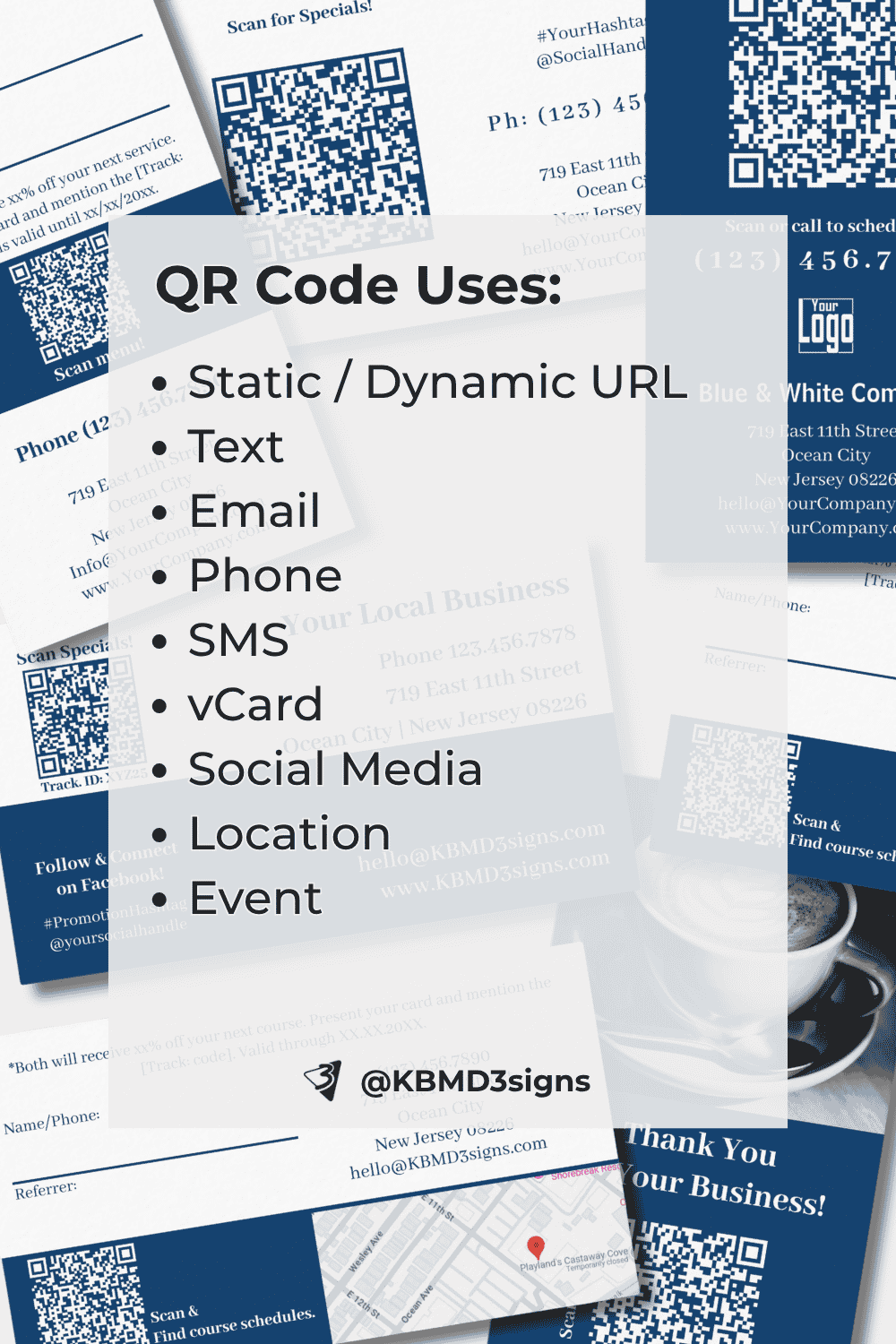
The possibilities are limited only by your imagination. Here are a few creative ways to route your QR codes:
- Website URL (Static/Dynamic): Direct clients instantly to your portfolio, landing page, or online store.
- Text (SMS): Pre-populate a text message. When scanned, the user’s phone opens their messaging app with a pre-written inquiry to your business number.
- Email: Pre-populate an email with your address and a subject line (e.g., “I’d like to schedule a consultation!”).
- Phone Call: Instantly prompt the user’s phone to call your business.
- vCard: Directly download your digital contact card into their phone’s address book.
- Social Media: Link to a “Linktree” style page or directly to your Instagram or LinkedIn to boost your followers.
- Location: Perfect for local businesses. The QR code opens Google Maps or Apple Maps with directions directly to your storefront.
- Event Invitations: Link to an RSVP page or a calendar invite for an upcoming webinar or trade show.
Marketing Ideas to Generate & Keep Customers
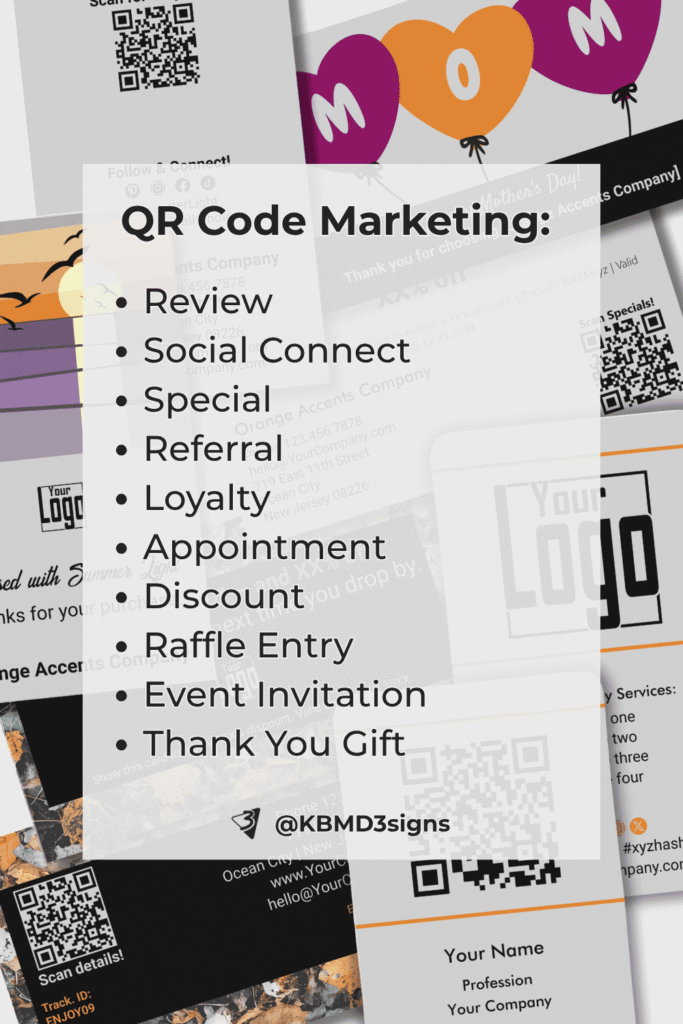
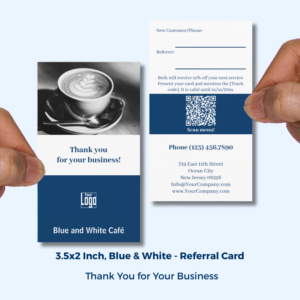
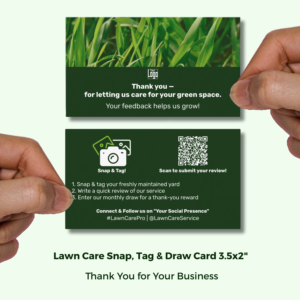
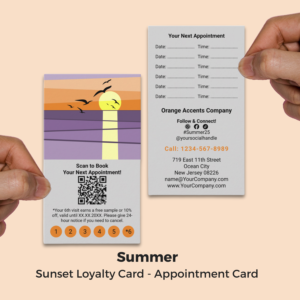
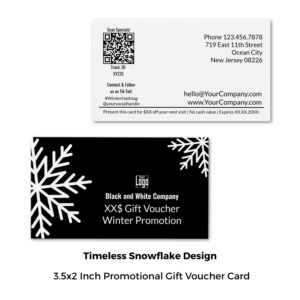
QR codes aren’t just for introductions; they are powerful tools for customer retention. Consider using QR codes on business-card-sized “Thank You” cards slipped into product packaging. These can offer a discount code, a seasonal event raffle entry, a loyalty program sign-up, or a request for a Google review.
However, as your business grows—especially if you find yourself exhibiting at large events—your networking needs may outgrow simple static codes. Digital networking tools have expanded beyond simple contact sharing. Depending on the setting, professionals may use platforms such as Wave Connect, Popl, or Cvent to scan badges, exchange digital contact details, and organize new connections during events. These tools can be useful when a simple QR code is no longer enough to manage a larger number of contacts or coordinate follow-up across a team.
If you aren’t ready for an enterprise platform yet, but you still want to track customer engagement or build marketing funnels without paying for expensive QR subscriptions, check out these budget-friendly DIY methods:
Best Design Practices
Designing business cards with QR codes requires a thoughtful approach to ensure they are visually appealing, functional, and leave a lasting impression.
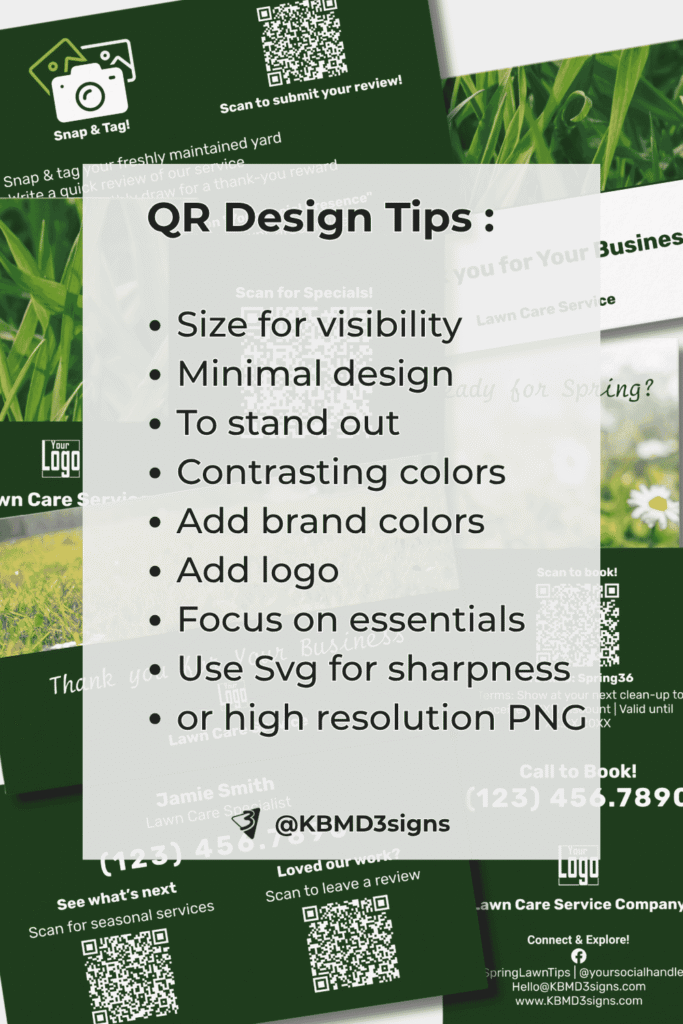
- Strategic Placement: Integrate the QR code seamlessly. Avoid placing it in a crowded or cluttered space. It should be large enough to scan easily but shouldn’t overwhelm the card.
- Contrasting Colors: Use high contrast between the QR code and the background. Dark codes on light backgrounds work best for smartphone cameras.
- Clean and Minimalistic Design: Less clutter allows the QR code to stand out. Prioritize essential text and maintain white space for a polished appearance.
- Incorporate Branding: Include your logo subtly in the center of the code and ensure the colors align with your brand’s visual identity.
- Use High-Quality Graphics: Ensure the QR code is generated in high resolution. A high-quality PNG is ideal, especially if you plan to upload the code into design software like Canva.
- Readable Font and Hierarchy: Choose a legible font for all text elements and establish a clear hierarchy for your name and job title.
- Include a Call-to-Action (CTA): Add subtle text near the code encouraging action, such as “Scan for Portfolio” or “Connect with me online.”
- Information Redundancy: Always include essential written contact details alongside the QR code for those who prefer not to scan.
- Test for Mobile Optimization: Make sure the website or portfolio linked to your QR code looks great on a smartphone!
⇒ For QR code use ideas, check out the Community Gallery, which features designs by collaborating designers.
Common Mistakes to Avoid
Even a beautifully designed card can fail if the QR code isn’t implemented correctly. Avoid these common pitfalls:
- Making the code too small: Older smartphone cameras will struggle to focus on tiny codes.
- Crowding the “Quiet Zone”: QR codes need a clear, unprinted border around them to be recognized by scanners.
- Insufficient contrast: Stick to dark colored codes on light backgrounds.
- Unsuitable destinations: Linking to a desktop-only website that requires pinch-to-zoom on a mobile phone provides a frustrating user experience.
- Missing the “Why”: Dropping a bare QR code on a card without an enticement or CTA leaves the user wondering why they should bother scanning it.
Explore KBM Designs’ QR Code Products
Create a consistent business identity across every client interaction using professionally designed Canva templates.
Whether you’re sending an estimate, quote, invoice or handing over a business card, every document reflects the same clean and trustworthy brand.
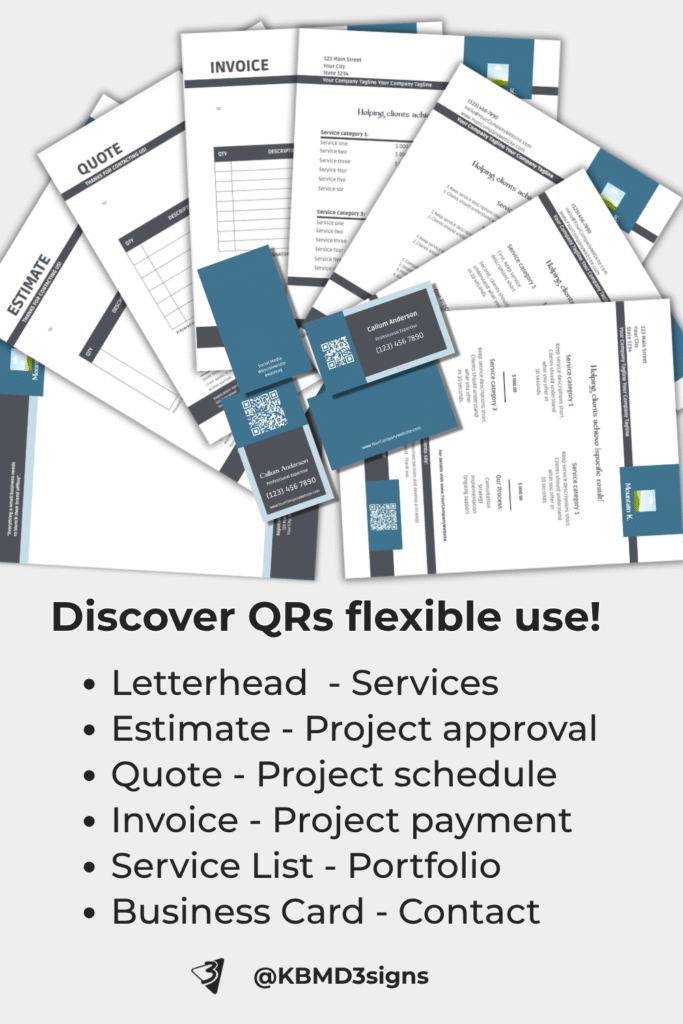
Assemble your complete Brand Kit with coordinated templates for:
- Business Cards
- Letterhead
- Service List
- Estimate
- Quote
- Invoice
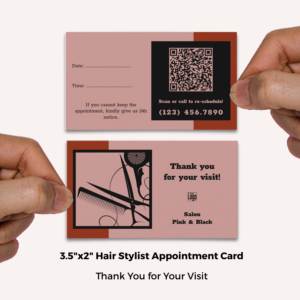
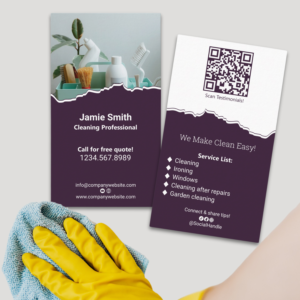
QR Business Card Designs on Zazzle
⇒ Assemble your Essential Brand Kit on Etsy
⇒ Explore ready-to-print SMB marketing on Zazzle
Choosing Your Best Design Path
Canva Templates (Digital Downloads): Perfect for the creative who loves customization. You get full ownership of the design to adjust at your leisure and can print them via any service (or at home) that suits your budget. Includes global sizing: US standard, EU, and NZ formats.
Zazzle Templates (Print-on-Demand): Ideal for the professional on the go. Customize your design directly on the Zazzle platform, and receive a high-quality, professionally printed product shipped directly to your door. Simple, ready-to-use, and hassle-free.
Show off your personal style or post a review!
Frequently asked questions (FAQs) about QR Code Cards
A QR code business card is a traditional printed business card that incorporates a Quick Response (QR) code, allowing recipients to scan and instantly access digital information such as contact details, websites, or multimedia content.
Use your smartphone’s standard camera app or a dedicated QR code reader. Position the camera over the QR code and wait for a pop-up link to appear on your screen, then tap it to open the destination. device to recognize and decode the information.
A QR code can store a wide variety of data, including downloadable contact details (vCard), website URLs, portfolio links, social media profiles, PDF menus, and even pre-written text messages or emails.
Yes, but the security depends on the destination link. A QR code is just a visual representation of a URL. When scanning someone else’s card, always verify the URL preview that pops up on your screen before tapping.
Security Tip for Creators: If you use generic link shorteners (like Bitly) to make your codes dynamic, users scanning your card will only see the unknown shortener domain, which can cause hesitation. For maximum trust and security, it is best to route your dynamic codes through a custom domain that you own so your customers instantly recognize your brand name on their screen.
Absolutely! Most modern QR code generators allow you to change the color of the code, adjust the shape of the data blocks, and even place your company logo directly in the center, provided it remains scannable with high contrast.
They eliminate the friction of data entry. Instead of relying on a prospect to manually type your email address into their phone, a quick scan saves your details directly to their contacts or opens your lead-capture form instantly.
Yes, if you use a dynamic QR code, a URL shortener, or route the link through your own website’s redirect plugin, you can track analytics. This reveals insights such as how many times the card was scanned and when the interactions occurred.
Beyond sharing contact info, creative uses include linking to interactive portfolios, video introductions, event RSVP pages, discount codes, or business support links like scheduling calendars and secure payment portals.

-

Grey And Blue Branding: Building Trust-Driven Visual Systems for Small Businesses
Read the post …: Grey And Blue Branding: Building Trust-Driven Visual Systems for Small Businesses -
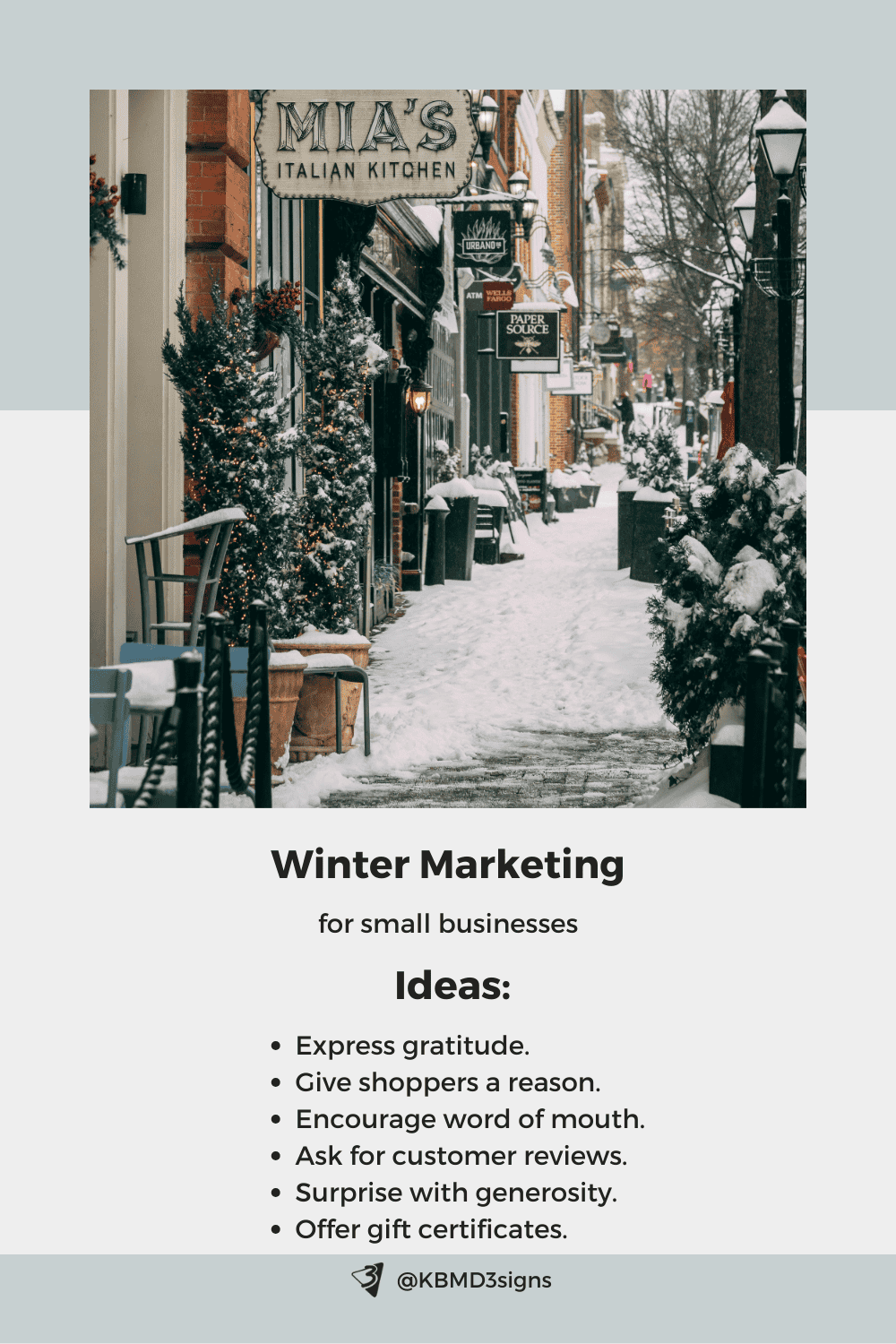
6 Winter Marketing Ideas for Small Businesses
Read the post …: 6 Winter Marketing Ideas for Small Businesses -

6 Offline Summer Marketing Ideas for Small Businesses
Read the post …: 6 Offline Summer Marketing Ideas for Small Businesses